
Separate household contribution from paid extra work
Keep ordinary family responsibilities distinct from optional jobs that earn allowance or extra money.
Chore and allowance app
DaCasa helps families separate ordinary household contribution from paid extra work, keep allowance notes visible, and review progress without negotiating every task.
Allowance screenshot
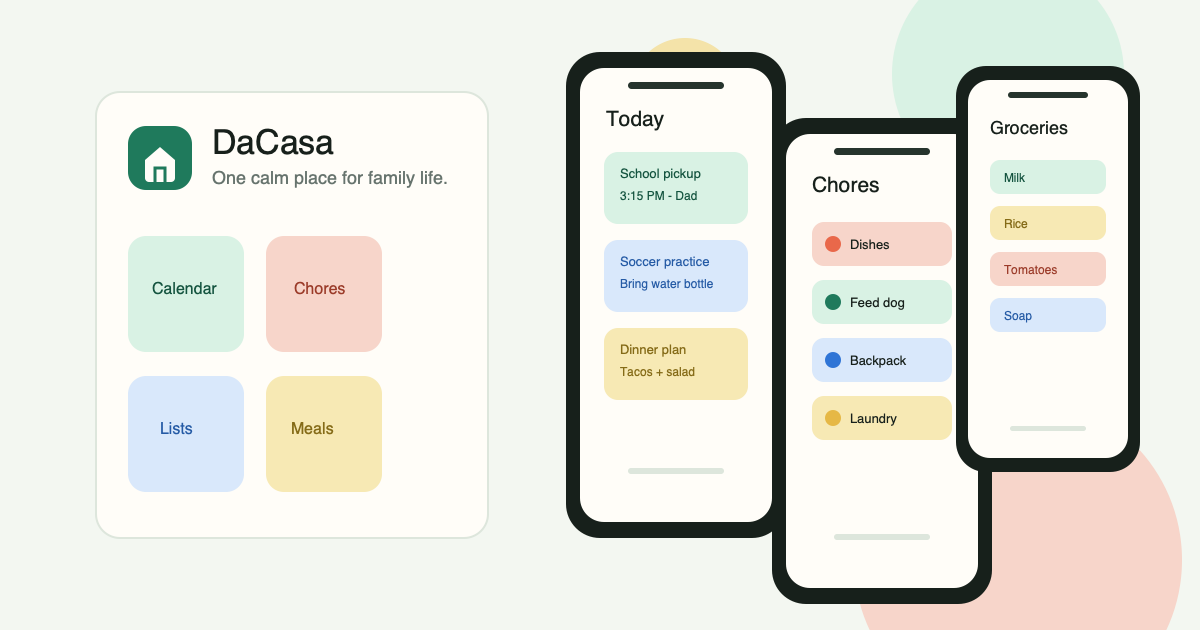
DaCasa keeps family chore progress and allowance conversations visible without presenting itself as a payment app.
Chore and allowance app
Keep ordinary family responsibilities distinct from optional jobs that earn allowance or extra money.
Use visible chores with simple expectations so children can understand the responsibility.
Completion states make progress visible for review instead of relying on memory.
Track agreements, goals, and family money lessons in context without implying money transfer.
Review chores and allowance rhythms as children move from simple tasks to fuller ownership.
Chore and allowance app
A good system changes with age and keeps expected contribution separate from paid extra work.
Expected tasks include toys, pajamas, backpack, and pet water. Paid extras stay rare and simple.
Recurring chores include trash, table clearing, laundry sorting, and a savings goal note for allowance.
Responsibilities expand to laundry completion, activity gear, meal help, and larger paid household projects.
Adults and children review completion, expectations, allowance notes, and goals once a week.
DaCasa feature bridge
Family money lessons make more sense when children can see the work, rhythm, and goal.
Create recurring chores and visible household responsibility.
Read post ->Place chores inside morning, bedtime, school, and weekly rhythms.
Read post ->Keep allowance notes and savings goals in household money context.
Read post ->Use short checklists for school-day responsibility.
Read post ->Related reading
These articles help families separate chores, routines, and ownership.
Use the distinction that reduces confusion around household work.
Read post ->Review responsibilities and overloaded owners without daily negotiation.
Read post ->Design rhythms for recurring household work.
Read post ->FAQ
Yes. DaCasa can keep chores, progress, allowance notes, and savings goals visible in the same household system.
Do not assume money transfer. DaCasa should be positioned as a responsibility and allowance tracking system unless payment functionality exists.
Not necessarily. Many families separate ordinary household contribution from optional paid extra work so children learn both responsibility and money skills.
Short visible tasks work best: toys, backpack, clothes, table help, pet water, or putting items where they belong.
A weekly review is usually enough for progress, completion, savings goals, and changing responsibilities.
Teach responsibility in context
Use DaCasa to separate expected contribution from paid extra work and review responsibility with less negotiation.
Get DaCasaPlans
DaCasa has a free plan for the basics and paid plans for families who want deeper routines, budget tools, and more household members.
For trying the core household plan.
For families running the week together.
For bigger homes and extended coordination.